Five-book literary series · LoadCanon
Immigration, fear, and the island a frightened society builds for strangers.
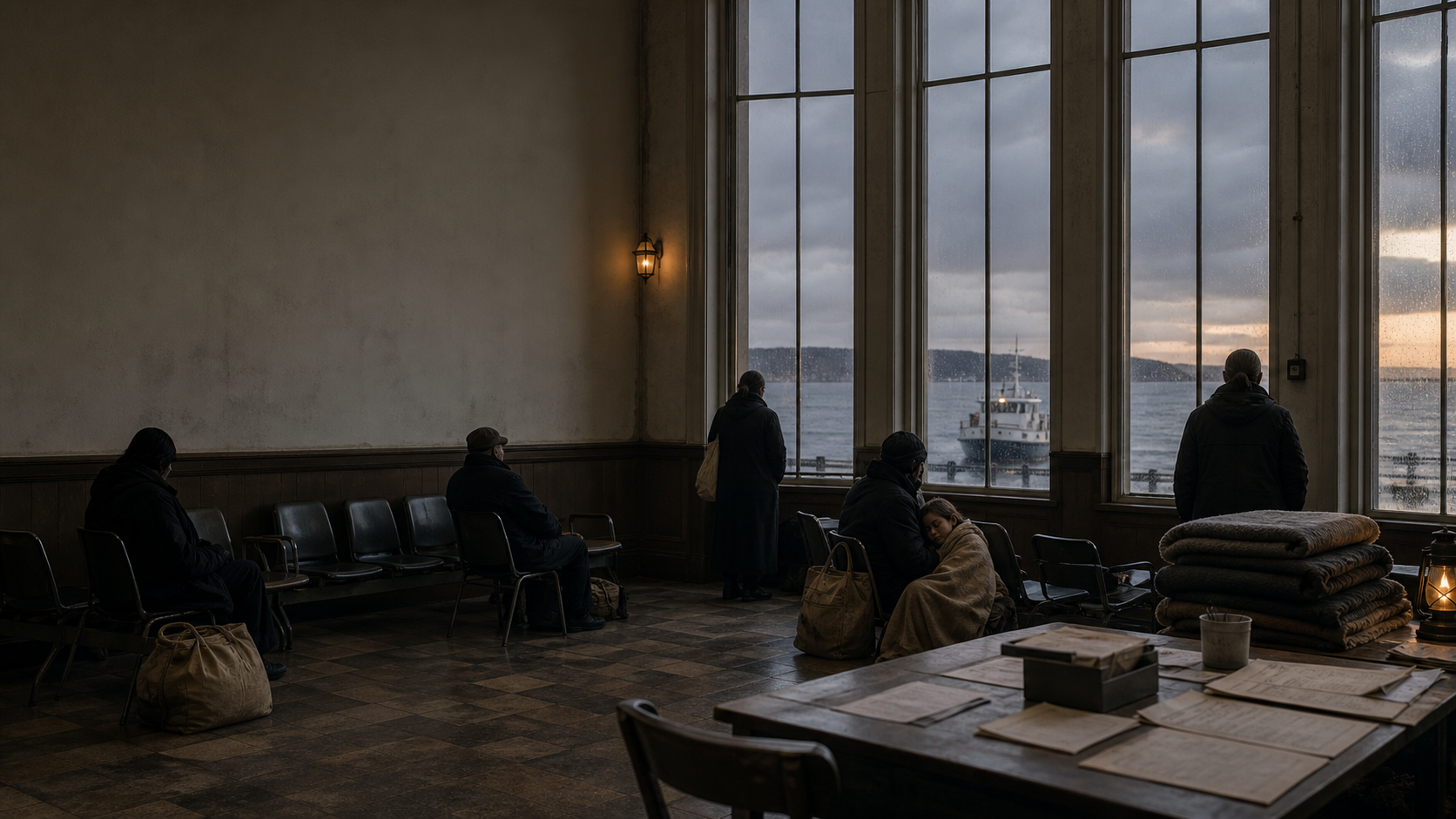
Island of Strangers follows citizens whose towns change without consent, newcomers who are spoken about before they are heard, and officials who learn to hide coercion inside calm public language. Before there is an island, there are hotels, shelters, buses, borders, forms, and people afraid of losing the lives they know.
The pressure points
What you read
Four ways into one fracture. No villains — only people, and the loss of a shared language.
The citizens
Residents whose towns change without consent — housing strain, tired services, fear that the place they know is being decided for them.
The newcomers
People spoken about before they are heard: frightened, exposed, carrying children, papers, and the few objects a life fits into.
The program
Officials and analysts who learn to hide coercion inside calm language — voluntary, orderly, humanitarian — until removal sounds like rescue.
The island
A shore no one chose, where survivors must build rules to stay alive, then watch order begin to ask for obedience.
The five-book cycle
Before, during, and long after.
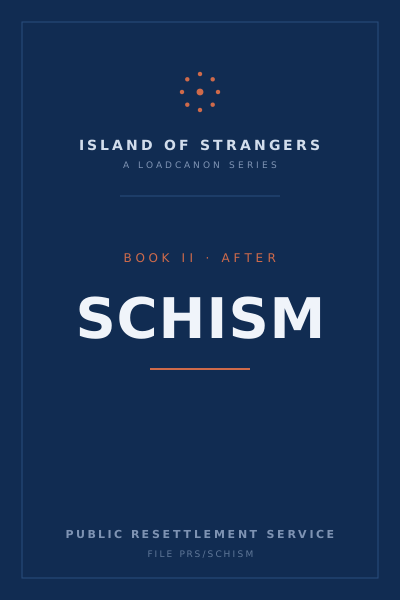
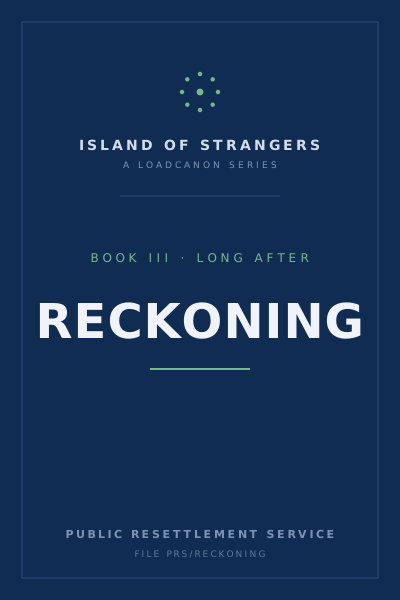
How the story moves
A crisis becomes a program. The program becomes a transfer. The transfer becomes an island. The island becomes a moral test.
Read it as five novels, beginning to end — or follow the documents the island left behind. Either way, the people come first: mothers, drivers, nurses, clerks, residents, believers, and strangers trying to stay human when order starts asking for obedience.
What the series follows
Three questions, held all the way through.
- 01
Fear
Where it comes from on every side, and how it is turned into policy.
- 02
Consent
What it means to agree to something you cannot read, refuse, or leave.
- 03
Belonging
Who gets to stay, who gets to speak, and what a shared language is worth.
Start
Begin with the first hour.
A free slice of Book I: Amara on the beach with her infant, the arrival broadcast, the supplies, the first form, and the first quiet realization that the boat is not coming back.